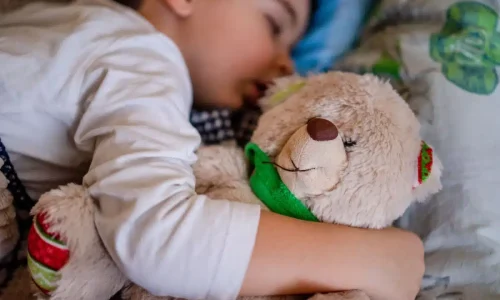

Feeling anxious before a procedure is normal and very common. More than half of adults having surgery feel anxious beforehand, and up to 60% of children do. Here is what anxiety actually does to the body, and what helps.
- Over 50%Of adults feel anxious before surgery
- Up to 60%Of children feel anxious before surgery
- 1 in 10Anxious children wake distressed, against 1 in 65 otherwise
What anxiety does to the body
- Short burstsYour body releases adrenaline and the stress hormone cortisol, and your heart rate rises. This is a normal, short-lived response and it is not harmful. Research shows that short-term stress actually gives parts of the immune system a temporary boost, not a knock.
- Long-running stress is differentStress that continues for months, such as a long illness, caring for someone unwell, or ongoing worry, does have measurable effects: slower wound healing, more inflammation, and a higher chance of picking up infections.
- The vagus nerveThis nerve runs from the brain to the heart and gut, helping calm the body and settle inflammation. People with long-standing anxiety tend to have a lower resting level of this calming activity.
Does anxiety affect recovery?
For children, yes
A study of 241 children having their tonsils and adenoids removed found that anxious children had more pain, needed more pain relief at home, and were far more likely to wake from the anaesthetic distressed and confused: about 1 in 10, against 1 in 65 in children who were not anxious. A small number of studies have also reported higher infection and bleeding rates in anxious children.
For adults
Long-term stress is linked to slower wound healing. In a controlled study where volunteers were deliberately exposed to cold viruses, those under more stress were more likely to become infected, with the risk rising step by step as stress rose.
For parents
Your anxiety reaches your child. Studies measuring stress hormones in parents and children find that their levels move together.
Being in the room is not enough on its own
Reviews of many studies found that a parent simply being present at the anaesthetic usually did not reduce anxiety in either the child or the parent. What does work is a parent present alongside a distraction, such as a video game or tablet. That combination is the most effective approach found so far.
Helping yourself helps your child. When parents were shown a short video explaining what would happen, both the parents' and the children's anxiety fell measurably.
What actually helps before surgery and an anaesthetic
- Music. Listening to music before a procedure reliably lowers anxiety. In one large study it worked as well as a sedative drug.
- Distraction in the moment. Games and tablets during the anaesthetic work well.
- Information. Knowing what will happen, step by step, consistently reduces anxiety. Ask us.
- Regular relaxation or meditation. One of the few approaches shown to shift measurable things: cortisol, blood pressure, heart rate and inflammation markers all fall.
- Slow breathing. Widely recommended and safe, though the research behind it is thinner than its popularity suggests.
- Touch and physical comfort. Especially powerful for babies and small children, where a parent's touch measurably lowers stress hormones.
Before your appointment
If you or your child are feeling anxious about an upcoming procedure, tell us. Walking through what will happen, step by step, is one of the most reliably effective things available, and it costs nothing.
Download this page as a PDF information sheet
Where these findings come from
Short versus long stress, and stress and infection
Segerstrom & Miller, Psychol Bull 2004;130:601–30 · Cohen et al., N Engl J Med 1991;325:606–12 · Christian et al., Neuroimmunomodulation 2007;13:337–46
Cortisol and the vagus nerve
Stalder et al., Psychoneuroendocrinology 2017;77:261–74 · Bonaz et al., J Physiol 2016;594:5781–90 · Cheng et al., Psychiatry Clin Neurosci 2022;76:292–302
Children's recovery and the parent–child stress link
Kain et al., Pediatrics 2006;118:651–8 · Di Lorenzo et al., Neurosci Biobehav Rev 2021;132:1010–36
Parental presence, distraction and videos for parents
Chundamala et al., Can J Anaesth 2009;56:57–70 · Chen et al., J Clin Nurs 2025;34:1493–507 · Chow et al., Health Psychol 2018;37:746–58 · Jung et al., Anesth Analg 2021;132:798–806 · Eijlers et al., Eur J Anaesthesiol 2019;36:728–37
Music, meditation, breathing and touch
Bradt et al., Cochrane Database Syst Rev 2013;(6):CD006908 · Pascoe et al., J Psychiatr Res 2017;95:156–78 · Hopper et al., JBI Database System Rev Implement Rep 2019;17:1855–76 · Packheiser et al., Nat Hum Behav 2024;8:1088–107
All sources retrieved from PubMed. Full DOI links are in the accompanying detailed review. General information only, not a substitute for advice about your own care.